
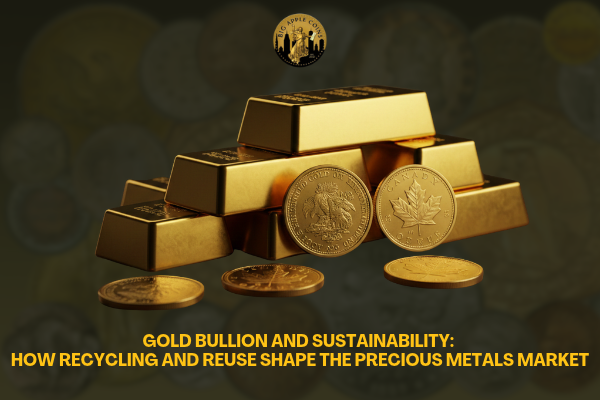
Gold occupies an odd position in the sustainability conversation. It is one of the most durable stores of value that exists, held by central banks and households for exactly that reason, and yet pulling new gold out of the ground has a real cost. Understanding how the two sides fit together helps explain a lot about where the gold in your local coin shop actually comes from.
Why Gold Holds Value the Way It Does
Gold does not rust, corrode, or degrade. Practically every ounce ever mined is theoretically still in circulation somewhere in the world, which is part of why gold has functioned as a store of value for thousands of years and why central banks still hold it as a reserve asset today.
That durability is what separates physical gold from most other assets. It carries no counterparty risk. Nobody owes you anything for it to hold its value, which is a large part of why families buy gold bullion as a hedge against inflation and financial instability, and why that habit hasn't changed much across generations.
The Real Environmental Cost of New Mining
It's worth being straightforward about this: newly mined gold carries a genuine footprint. Large-scale mining disturbs land, consumes significant energy, and often uses chemicals like cyanide to separate gold from ore. Artisanal and small-scale mining operations carry an additional problem, since this sector is widely recognized as the largest single source of human-caused mercury pollution in the world, a byproduct of using mercury to extract gold from raw ore.
None of that is a reason to avoid gold. It's a reason sourcing matters, and it's exactly why the recycling side of the market carries so much weight.
How Much of the Gold Supply Is Actually Recycled
Gold can be melted and refined indefinitely without losing quality, which makes it about as close to a truly circular material as exists. According to the World Gold Council, mine production typically supplies roughly three-quarters of the world's annual gold, with recycled gold making up most of the rest, largely reclaimed from old jewelry and a smaller share from electronics. In 2025, global recycled supply reached its highest level since 2012.
That's not a marginal contribution. Recycled gold materially reduces how much new mining the market needs to support current demand, and every ounce that gets refined and reused is an ounce that didn't require another mine to produce it.
What This Means When You Sell Gold Bullion
Every time someone sells gold bullion, whether it's a coin, a bar, or old jewelry pulled out of a drawer, that metal has a real chance to re-enter the supply chain instead of sitting unused. A responsible dealer refines and recirculates that gold rather than letting it disappear, which keeps demand for freshly mined gold a little lower than it would otherwise be.
That's part of what buying from established gold bullion dealers actually means in practice. It's not just about getting a fair price. It's about the metal moving through a chain that accounts for where it came from and where it's going next.
Buying Gold With Sustainability in Mind
If sourcing matters to you as a buyer, a few habits go a long way. Favor dealers who are transparent about where their gold comes from. Recognize that much of the bullion already circulating in the market, coins, bars, and older jewelry, is recycled gold by definition, since it's being resold rather than freshly mined.
Holding physical gold for the long term is itself a quietly sustainable choice. Durable assets don't need to be replaced, remanufactured, or discarded the way most consumer goods do. A gold coin bought today can be sold, refined, and reused decades from now without losing an ounce of its value.
Why Choose Big Apple Coins?
-
Expert appraisals. We evaluate gold bullion and jewelry accurately, against live spot and current demand.
-
Competitive offers. Fair pricing whether you're buying new bullion or selling gold you already own.
-
Instant payment. Cash, check, or wire, the same visit.
-
Convenient location. In the Diamond District, one of the most trusted names among gold bullion dealers in New York.
How to Buy or Sell With Us
-
Visit us at 55 West 47th Street, 4th Floor, Suite 430.
-
Get an appraisal. Bring in your coins, bars, or jewelry for an on-the-spot evaluation.
-
Review our offer, priced from current market data.
-
Receive payment immediately once you accept.
Looking for gold bullion coins for sale, or ready to sell what you already have? Contact us and we'll walk you through what's available or get you an estimate.
Tips for Buying and Selling Responsibly
-
Ask your dealer about sourcing. A transparent shop should be able to explain where their bullion comes from.
-
Consider that most circulating bullion is already recycled in some sense. Buying secondhand coins and bars keeps that gold moving without new mining.
-
Sell rather than store unwanted gold. Idle jewelry or coins do nothing for you or the market sitting in a drawer.
-
Hold for the long term. Gold's durability is part of its case as a sustainable asset, so treat it as a long hold rather than a quick trade.
-
Buy recognized products. They resell faster and keep circulating efficiently through the market.
Visit Big Apple Coins Today
Whether you're buying gold bullion coins for sale or looking to sell gold bullion you already own, come see us in the Diamond District.
Big Apple Coins 55 West 47th Street, 4th Floor, Suite 430 New York, NY 10036 (212) 321-0073 · info@bigapplecoins.com Monday–Thursday 10:00 AM–6:00 PM · Friday 10:00 AM–5:00 PM
Get a free appraisal or browse our gold bullion in person.
This article is general information, not investment or environmental advice.


Share:
Sovereign Gold Coins vs Generic Bullion: Why Resale Premiums Can Be Different