
Two Morgan dollars with the same date and mint mark can look slightly different under a loupe, and sometimes that difference is worth real money. A doubled lip, a repunched date or an oddly placed mint mark can lift an ordinary silver dollar into a collectible in its own right. These quirks are the heart of morgan silver dollar varieties, and the VAM system is how most collectors keep track of them.
What VAM Means
VAM stands for Van Allen and Mallis, the two researchers, Leroy Van Allen and A. George Mallis, who cataloged die differences in Morgan and Peace dollars. Their reference work, published in 1977, gave collectors a shared numbering system for the variations they were finding.
More than 3,000 VAM numbers exist today. A VAM is a die variety, which means the same difference shows up on many coins struck from the same die. That makes it different from a one-off mint error, which affects a single defective coin. Typical examples include a repunched date, a differently sized mint mark or doubling in the design.
Why Die Differences Happen
In the 1800s, dies were prepared by hand. Hubs impressed the design into working dies, sometimes more than once, and the dies were reworked, repunched and polished along the way. Small shifts between impressions left doubling or other marks. Every coin struck from that die carries the same trait, which is why a variety can be identified and listed.
Most VAMs Carry Little Premium
This is the part new collectors often miss. Out of thousands of cataloged VAMs, only a small share matter to the market. PCGS attributes 317 Morgan VAMs, drawn from collector-identified lists such as the Top 100 Morgan Dollar Varieties (the VAM Keys), the Hot 50 and the Hit List 40. The rest are not attributed because they are not significant and carry little or no premium over the common variety.
Attribution can also be specific. For example, an 1889 coin with a double ear is only attributed if it matches one of a few listed VAM numbers. Other double-ear varieties do not qualify.
A Famous Example: The 1888-O Hot Lips
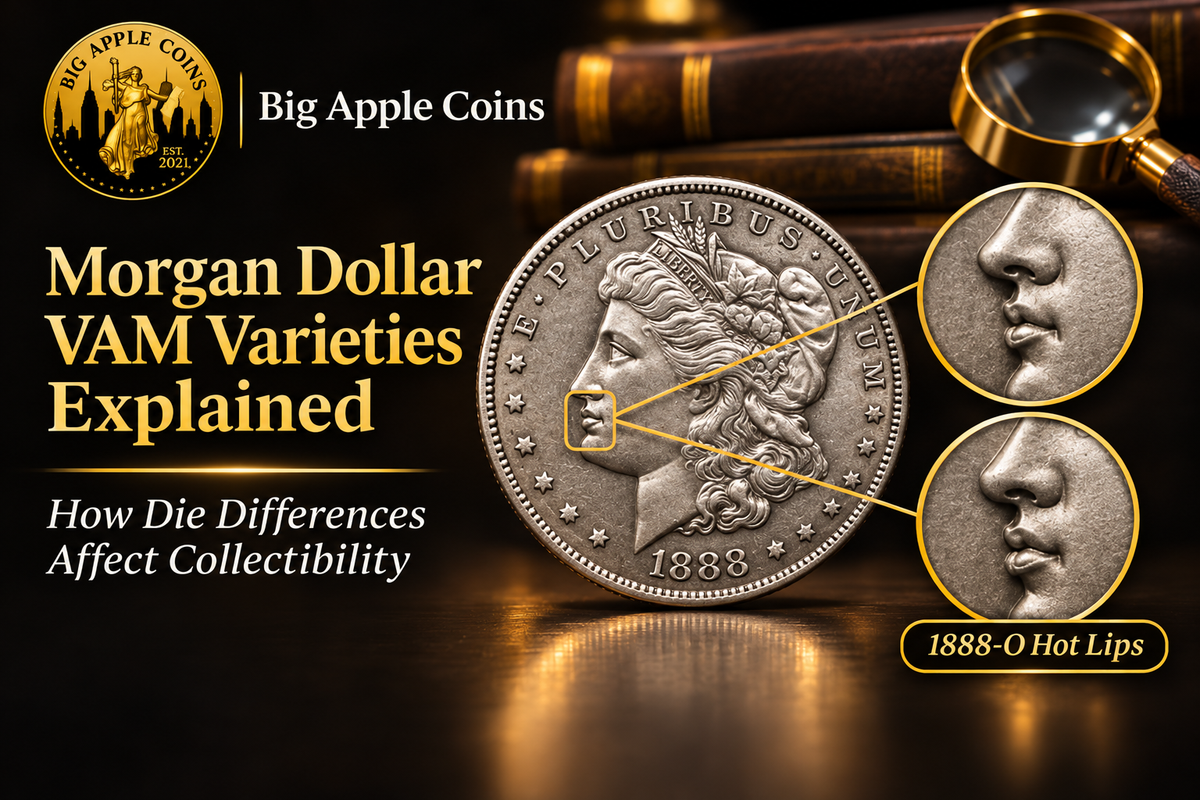
The best-known story in the series is the 1888-O VAM-4, nicknamed "Hot Lips." It is a doubled die with a second, open mouth sitting slightly above the normal lips on Liberty. Van Allen and Mallis cataloged it in the late 1960s, and collectors later gave it the name after a character from the film MASH*.
What makes it appealing is the mix of easy identification and real scarcity. A common 1888-O sells for about $100 in lower Mint State, while the Hot Lips variety sells for multiples of that. In high grades it is hard to find: fewer than 10 Uncirculated grading events have been reported by PCGS and NGC combined, and the top example is a PCGS MS-62. Most surviving coins are in XF or lower, and many have been cleaned.
How Varieties Affect Value
Several factors decide whether a variety adds a premium:
-
Visibility. Strong, easy-to-see features draw more buyers.
-
Scarcity. A variety that is hard to find in higher grades is worth more.
-
Demand from variety collectors. Listing in a respected reference such as the Top 100 or Hot 50 increases interest.
-
Condition and eye appeal. Cleaning hurts a variety coin just as it hurts any other.
Many collectors also prefer a variety on a coin that is already desirable, such as rare date morgan silver dollars, where the date and the die difference both add to the story.
Certified vs Raw for Variety Coins
Certification matters even more when a premium rides on a small detail. With certified morgan dollars, a third-party grade comes with the coin, and when a variety is attributed it can be noted on the holder. That takes the guesswork out of whether a doubled die is real or just post-mint damage.
Owners of pcgs morgan silver dollars can request variety attribution, but only through PCGS Collectors Club members and Authorized Dealers, and only listed varieties qualify. Coins that do not qualify can still be fine collectibles, but they will not carry a variety label.
Why Choose Big Apple Coins?
-
Expert appraisals. Our staff evaluates Morgan dollars accurately, including mint marks, condition and notable die features.
-
Competitive offers. Fair pricing whether you are buying or selling.
-
Instant payment. Cash, check, or wire the same visit.
-
Convenient location. In the Diamond District, an easy stop when you want to examine a coin in hand.
How to Buy or Sell With Us
-
Visit us at 55 West 47th Street, 4th Floor, Suite 430.
-
Get an appraisal. Bring your Morgans for an on-the-spot evaluation.
-
Review our offer, based on current market pricing.
-
Receive payment immediately once you accept.
Prefer to buy morgan dollars online first and then come in to see the coin? Contact us to find out what is in stock, or browse our vintage silver.
Tips for Collecting Morgan Varieties
-
Learn the major lists first. Start with the Top 100 and the Hot 50 before chasing obscure numbers.
-
Check the claim on the coin itself. Doubling should be consistent and sharp, not a sign of post-mint damage.
-
Prefer certified coins for varieties that carry a large premium.
-
Skip cleaned coins unless the price reflects the damage.
-
Ask before you pay a premium. Not every VAM is worth more than the common type.
Visit Big Apple Coins Today
Whether you are hunting a famous doubled die or just curious whether your silver dollar is something special, come talk it through with us in the Diamond District.
Big Apple Coins 55 West 47th Street, 4th Floor, Suite 430 New York, NY 10036 (212) 321-0073 · info@bigapplecoins.com Monday–Thursday 10:00 AM–6:00 PM · Friday 10:00 AM–5:00 PM
Get a free appraisal or visit the shop in person.
This article is general information, not investment advice. Availability and prices change frequently.


Share:
Carson City Morgan Dollars: Why the CC Mint Mark Attracts Collectors
Peace Silver Dollar Key Dates and Mint Marks: A Collector's Starting Guide